

Quick answer
The cape cod whale watching season spans mid-April through late October, with peak activity from early May through mid-June when humpback whales, finbacks, and minke whales converge on Stellwagen Bank to feed. A secondary surge occurs in September as juveniles fatten before migration. Sightings drop sharply after Halloween as North Atlantic waters cool and krill populations migrate south.
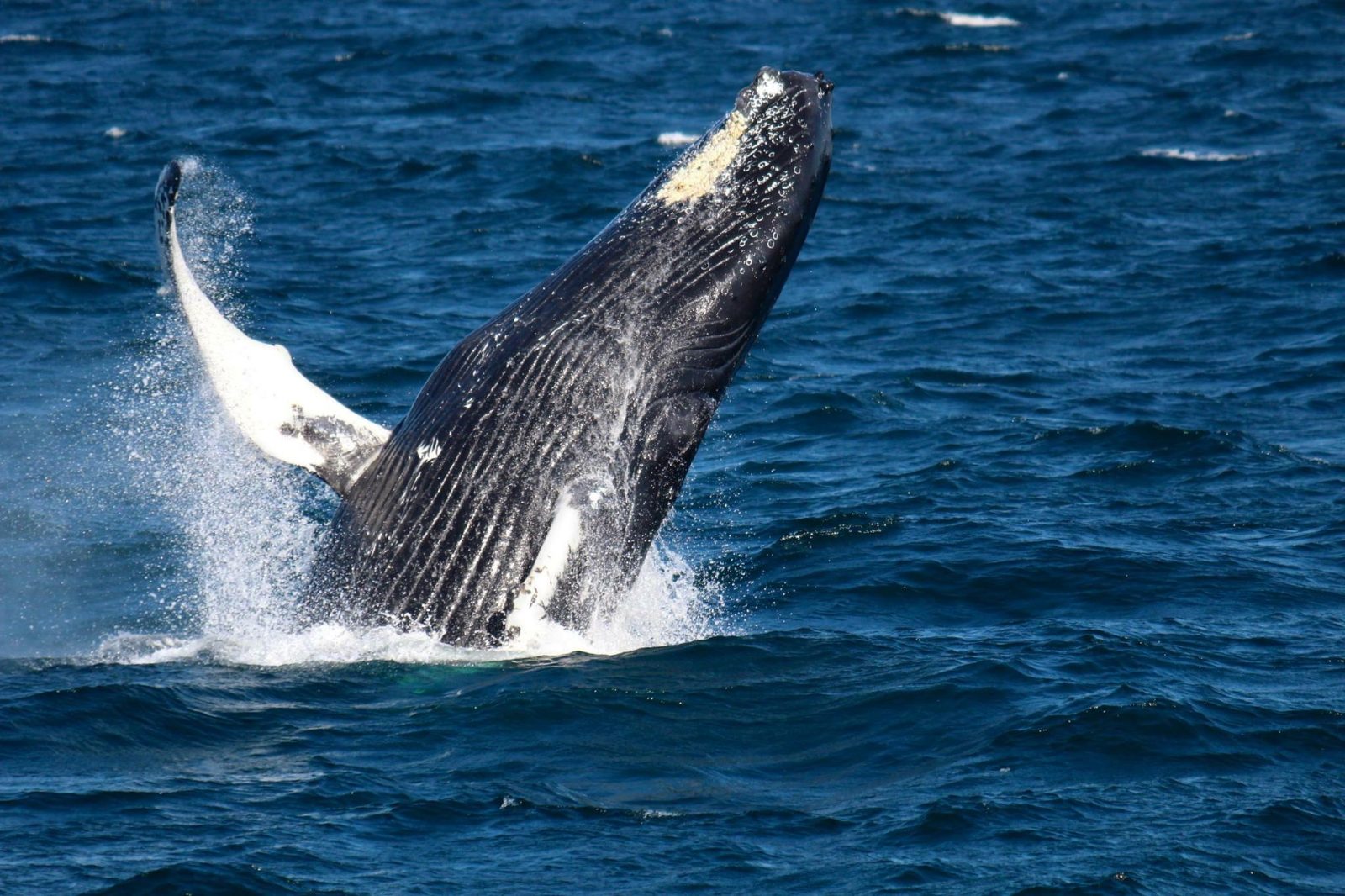
Humpback whales return to Stellwagen Bank with calendar precision, typically arriving in the third week of April as sand lance and herring schools mass over the sanctuary's glacial plateau. By the first week of May, researchers log daily sightings of known individuals—some catalogued for forty years—that travel from Caribbean breeding grounds to this twenty-five-mile feeding zone between Cape Cod and Cape Ann. Finback whales, the ocean's second-largest species, overlap with humpbacks but favor deeper troughs along the sanctuary's eastern boundary. Their season stretches longer, from late March through November, though visibility peaks in early summer when calmer seas allow close approach to their forty-ton frames. Minke whales, smallest of the baleen species here, appear in April and linger through October, often surfacing within yards of vessels as they chase mackerel schools into shallow water. Water temperature governs the cape cod whale watching season more than any fixed date. Spring upwelling currents pull cold, nutrient-dense water onto Stellwagen's submerged banks, triggering plankton blooms that attract baitfish and the whales that follow. When July heat stratifies the water column, whale activity shifts to thermal boundaries where currents meet, concentrating sightings along predictable seams that naturalists track daily. September brings a feeding frenzy as juveniles bulk up before their southbound journey, often breaching repeatedly in competitive displays. Morning departures between six and noon align with the sanctuary's calmest conditions and highest whale activity, particularly in May and early June when feeding peaks at dawn. The sanctuary imposes no entrance fee and remains accessible year-round, though commercial operators halt trips by early November as sighting rates fall below ten percent. Weather variables—sea state, fog, wind—matter more than the month on your ticket, which is why experienced operators scan conditions hours before departure and adjust routes to follow real-time spotter reports from the Massachusetts Bay network.
“Humpback whales return to Stellwagen Bank with calendar precision, typically arriving in the third week of April as sand lance and herring schools mass over the sanctuary's glacial plateau.”
Understanding the Cape Cod Whale Watching Season
The whale watching season at Stellwagen Bank National Marine Sanctuary primarily spans from April through October, coinciding with the migration of humpback, fin, and minke whales. Mid-season months offer the highest frequency of sightings as populations congregate in these nutrient-rich waters.
April–May
Moderate crowdsCool, 45–60°F; variable conditions
Early season sightings often include mothers with calves returning to the sanctuary.
June–August
High crowdsWarm, 65–80°F; generally calm seas
Peak summer months provide consistent whale activity and frequent sightings throughout the day.
September–October
Lower crowdsCool, 55–70°F; potential for chop
Late season trips capitalize on active feeding behaviors before the whales migrate south.
Morning departures
——
Morning trips between 06:00 and 12:00 offer the calmest seas and highest visibility for spotting marine life.
Verdict: The best time to visit is during the peak months of June through August, specifically targeting the 06:00–12:00 morning arrival window to ensure optimal viewing conditions.
Daily Access During Cape Cod Whale Watching Season
The Stellwagen Bank National Marine Sanctuary remains open to the public at all times throughout the whale watching season. As an open-ocean environment, access is constant regardless of the day of the week.
| Monday | 00:00–23:59 | Open 24 hours |
|---|---|---|
| Tuesday | 00:00–23:59 | Open 24 hours |
| Wednesday | 00:00–23:59 | Open 24 hours |
| Thursday | 00:00–23:59 | Open 24 hours |
| Friday | 00:00–23:59 | Open 24 hours |
| Saturday | 00:00–23:59 | Open 24 hours |
| Sunday | 00:00–23:59 | Open 24 hours |
Logistics for Reaching the Cape Cod Whale Watching Season Waters
Stellwagen Bank National Marine Sanctuary is located in Massachusetts Bay. Accessing these waters requires booking passage with commercial whale watching operators departing from various ports across Cape Cod.
Route 6 to Barnstable or Provincetown exits
Commercial vessel from Provincetown or Barnstable Harbor
Local shuttle or walking to harbor docks
Ecological Importance of the Cape Cod Whale Watching Season Sanctuary
Stellwagen Bank National Marine Sanctuary serves as a critical habitat for marine life due to its unique underwater topography and nutrient-rich waters. It remains one of the most significant feeding grounds for endangered whales in the North Atlantic.
842 square miles of protected sanctuary
The sanctuary encompasses 842 square miles of federal ocean waters between Cape Ann and Cape Cod, established in 1992 to protect marine resources.
Topography creates upwelling zones
The plateau of Stellwagen Bank causes deep, nutrient-rich water to rise to the surface, fueling the production of plankton and small fish.
Humpback whales utilize the sanctuary
Humpback whales, known for their complex bubble-net feeding behaviors, frequently visit the area to forage during the warmer months.
Home to endangered right whales
The sanctuary is a designated critical habitat for the North Atlantic right whale, one of the rarest large whale species in the world.
Diverse marine mammal population
Researchers have documented over 20 species of marine mammals within the sanctuary boundaries, including dolphins, porpoises, and various baleen whales.
Geological origin of the bank
The bank was formed approximately 15,000 to 20,000 years ago as a terminal moraine deposited by the retreating glaciers of the last ice age.
Sanctuary management and conservation
The National Oceanic and Atmospheric Administration manages the sanctuary to balance resource protection with compatible human uses like research and wildlife observation.
Preparation Checklist for Cape Cod Whale Watching Season
Prepare for variable marine conditions and a multi-hour open-ocean excursion with these essentials.
-
Book your whale watch tour in advance — Peak season departures fill quickly, especially morning slots with calmer seas.
-
Bring layered waterproof clothing — Ocean temperatures drop significantly once offshore, and spray is common.
-
Pack motion sickness medication — Take preventatives 30–60 minutes before departure for offshore swells.
-
Wear non-slip closed-toe shoes — Boat decks become slippery from spray and movement.
-
Bring sun protection and polarized sunglasses — Glare off open water is intense; polarized lenses help spot whale blows.
-
Carry binoculars and a camera — Whales surface unpredictably; zoom lenses capture distant breaches and tail flukes.
-
Arrive 30 minutes before departure — Boarding, safety briefings, and securing optimal viewing positions take time.
Check availability
Questions about the cape cod whale watching season
Everything you need to know about cape cod whale watching season